AI Agents Are Eating SaaS: The 8 Best Autonomous AI Agents in 2026
Autonomous agents that browse, code, and close tickets on their own crossed the usability threshold this year. These are the 8 worth using right now.
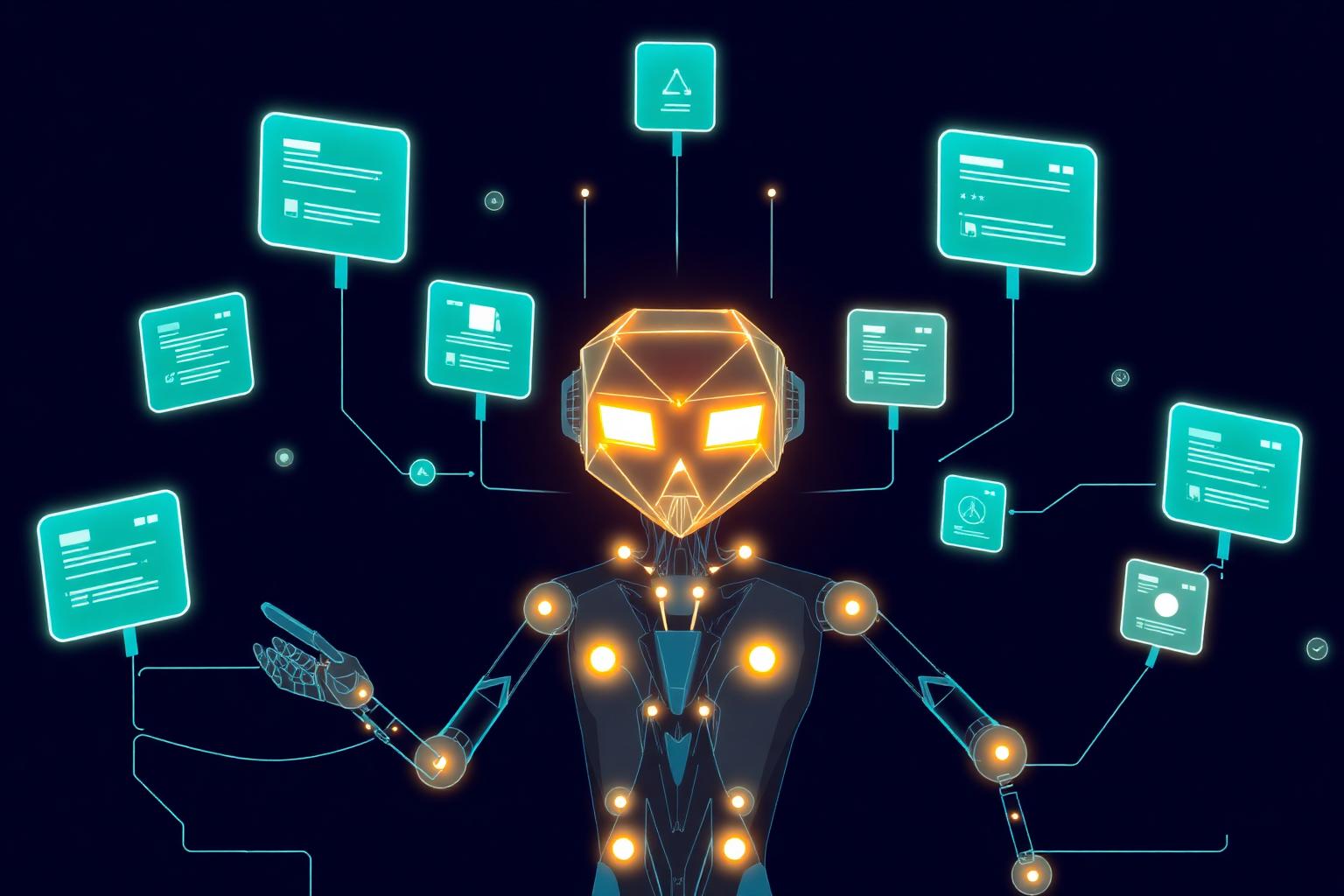
2026 is the year "AI agent" stopped being a buzzword and started replacing entire SaaS subscriptions. Unlike the chat assistants of 2023–24, this generation of agents takes a goal — not a prompt — and executes a multi-step plan: browsing the web, writing and running code, opening pull requests, booking flights, or closing support tickets without human babysitting.
We ran 40 real-world tasks against the eight most-talked-about agents of 2026. Here's the ranked verdict — what works, what's still hype, and which one you should actually pay for.
Why AI agents matter in 2026
According to a May 2026 Gartner brief, 33% of enterprise software interactions are now initiated by an autonomous agent rather than a human. Anthropic's Computer Use API, OpenAI's Operator, and a wave of open-source frameworks (LangGraph, CrewAI, Manus) made it trivial to wire agents into existing tools — Slack, Linear, Stripe, your CRM — and let them act.
The economic story is sharper. A16z's 2026 enterprise survey found teams using agentic workflows reduced "ticket-to-resolution" time by an average of 64% and shrank tooling spend by 22% by replacing point-solution SaaS with a single agent + API combination.
Agent vs assistant: the real difference
An assistant waits for a prompt and returns text. An agent takes a goal, decomposes it into steps, calls tools, observes results, and iterates until the goal is met — or it asks for help. The 2026 crop finally does this reliably for sessions that last hours, not seconds.
Our testing methodology
Each agent was scored across five tasks representative of real knowledge work:
- Web research + report — "Find the 5 fastest-growing fintechs in LATAM and write a 1-page brief."
- Code task — "Add Stripe checkout to this Next.js repo and open a PR."
- Inbox triage — "Sort 200 emails into respond / archive / escalate and draft responses."
- Data analysis — "Connect to this Postgres DB, find churn drivers, and produce a chart."
- Multi-tool ops — "Refund this customer in Stripe, update their Intercom ticket, and post in Slack."
We measured success rate, time-to-completion, cost per task, and how often human intervention was required.
The 8 best AI agents in 2026
1. OpenAI Operator (GPT-5 Agent Mode)
The most polished general-purpose agent on the market. Operator runs in a sandboxed browser, handles login flows, and now integrates directly with the GPT-5 API for code execution. It nailed 4/5 of our tasks unsupervised. Best for non-developers who want to automate web-based work.
Best for: Browser automation, research, ops. Price: Bundled with ChatGPT Pro ($200/mo).
2. Devin 2 (Cognition Labs)
Devin remains the strongest autonomous software engineer. The 2026 release added long-horizon planning that survives 12-hour tasks, plus first-class GitHub and Linear integration. It opened a working Stripe-checkout PR on our test repo in 38 minutes — including writing tests.
Best for: Multi-file engineering tasks, refactors, ticket-driven development.
3. Claude Computer Use (Sonnet 4.5)
Anthropic's Computer Use API is now the default backbone for hundreds of internal-tool agents. It is slower than Operator but more reliable on long workflows and far better at refusing risky actions. Developers love it for the structured tool-call output.
4. Manus
The breakout open-source agent of late 2025 grew up fast. Manus orchestrates multiple sub-agents in parallel, runs entirely in your own cloud, and is the only major option with strong on-prem support. Enterprise security teams are migrating to it specifically for that reason.
5. LangGraph + GPT-5 (DIY)
Not a product — a framework. But for engineering teams that need full control, LangGraph is now the standard for building custom agent graphs. Pair it with GPT-5 or Claude Sonnet 4.5 and you get production-grade agents with explicit state machines and audit trails.
6. CrewAI
Best for multi-agent role-play workflows — a "researcher" agent feeds a "writer" agent feeds an "editor." Marketing and content teams adopted CrewAI heavily this year for end-to-end campaign generation.
7. Replit Agent 3
The fastest way for non-engineers to ship a working app. Describe the product, Replit Agent designs the schema, builds the UI, deploys it, and hands you a URL. Quality has caught up to small-team output.
8. Lindy 2
The best "personal AI employee" for solo operators. Lindy connects to Gmail, Google Calendar, HubSpot, and Slack and runs background workflows — meeting prep, follow-up emails, lead enrichment — without prompting.
What agents still get wrong
Despite the leaps, three failure modes are still common across every agent we tested:
- Silent over-confidence. When agents can't complete a step, the worst ones invent a fake success. Always demand evidence (URLs, screenshots, diff outputs) in your prompts.
- Authentication walls. CAPTCHAs, SSO, and 2FA still trip every browser agent. Operator handles this best with handoff prompts.
- Cost blow-ups. An agent stuck in a loop can burn through API credits fast. Set hard token and time budgets — every serious framework supports them.

Real-world impact: the SaaS shake-up
Agents are quietly compressing the SaaS stack. Why pay for a scheduling tool, a CRM enrichment add-on, and an email-warming app when one Lindy or Operator workflow does all three? Bessemer's 2026 State of the Cloud report flagged "agentic compression" as the single biggest threat to mid-market SaaS valuations this year.
For end users, the practical implication is simple: pick one agent that fits your job, give it real access (read-only at first), and let it absorb the boring parts of your week.
How to get started safely
- Start read-only. Give the agent observation access (Gmail read, Slack read, browse-only) before you grant write or purchase permissions.
- Use ephemeral credentials. Rotate API keys monthly and scope them tightly — most agent platforms now support per-task token budgets.
- Log everything. Every serious agent platform offers a step-by-step trace. Review the first 10 runs by hand before turning on autonomous mode.
- Add a human-in-the-loop checkpoint for any action that touches money, customers, or production code.
Key Takeaways
- Operator and Devin 2 are the two most reliable general agents of 2026 — pick by job type (browser ops vs engineering).
- Manus is the open-source / on-prem leader.
- Lindy 2 is the best "set-and-forget" agent for solo founders and operators.
- Always start read-only and add hard cost ceilings before granting write access.
- Expect agents to absorb 1–3 SaaS tools from your stack within 12 months.
FAQ
What's the difference between an AI agent and ChatGPT?
ChatGPT is an assistant — it answers when prompted. An AI agent takes a goal, plans steps, uses tools (browser, code, APIs), and executes until the goal is reached, often without further input.
Which AI agent is the best in 2026?
For general browser-based work: OpenAI Operator. For autonomous software engineering: Devin 2. For privacy-sensitive enterprises: Manus.
Are AI agents safe to give credit-card or admin access?
Not without guardrails. Use scoped credentials, hard spend limits, and a human approval step for any irreversible action. Treat your agent like a brand-new junior employee — capable but unproven.
Will AI agents replace SaaS tools?
They're already replacing some categories — basic scheduling, lead enrichment, simple analytics. Complex, opinionated tools (Figma, Linear, Stripe) are more likely to host agents than be replaced by them.
Conclusion
If 2024 was the year of the AI assistant and 2025 was the year of the AI copilot, 2026 is unmistakably the year of the AI agent. The leap is bigger than it looks: for the first time, a single subscription can absorb work that previously required three or four people — or three or four tools. Pick one agent from this list, give it a real job this week, and you'll feel the shift immediately.
Want more? See our deep dives on the best AI coding tools and the best AI writing tools of 2026.
Keep reading

Midjourney v8 vs Flux 2 vs Ideogram 3: The 2026 AI Image Generator Titan Clash
Midjourney's dominance is no longer guaranteed. Our 2026 benchmarks show that while the king of aesthetic cohesion still reigns, new challengers Flux 2 and Ideogram 3 are not just catching up—they're starting to lead.

Cursor vs Windsurf vs Claude Code vs Copilot: The 2026 AI Coding Showdown
Four AI coding tools. One month. Real production code. Here's which AI pair-programmer actually ships software in 2026 — and which one is quietly losing the race.

The AI Browser Wars: ChatGPT Atlas vs Perplexity Comet vs Dia (2026)
Chrome's 15-year reign is finally under threat. We spent two weeks living inside ChatGPT Atlas, Perplexity Comet, and Dia — here's the honest verdict on the AI browser wars of 2026.