Midjourney v8 vs Flux 2 vs Ideogram 3: The 2026 AI Image Generator Titan Clash
Midjourney's dominance is no longer guaranteed. Our 2026 benchmarks show that while the king of aesthetic cohesion still reigns, new challengers Flux 2 and Ideogram 3 are not just catching up—they're starting to lead.
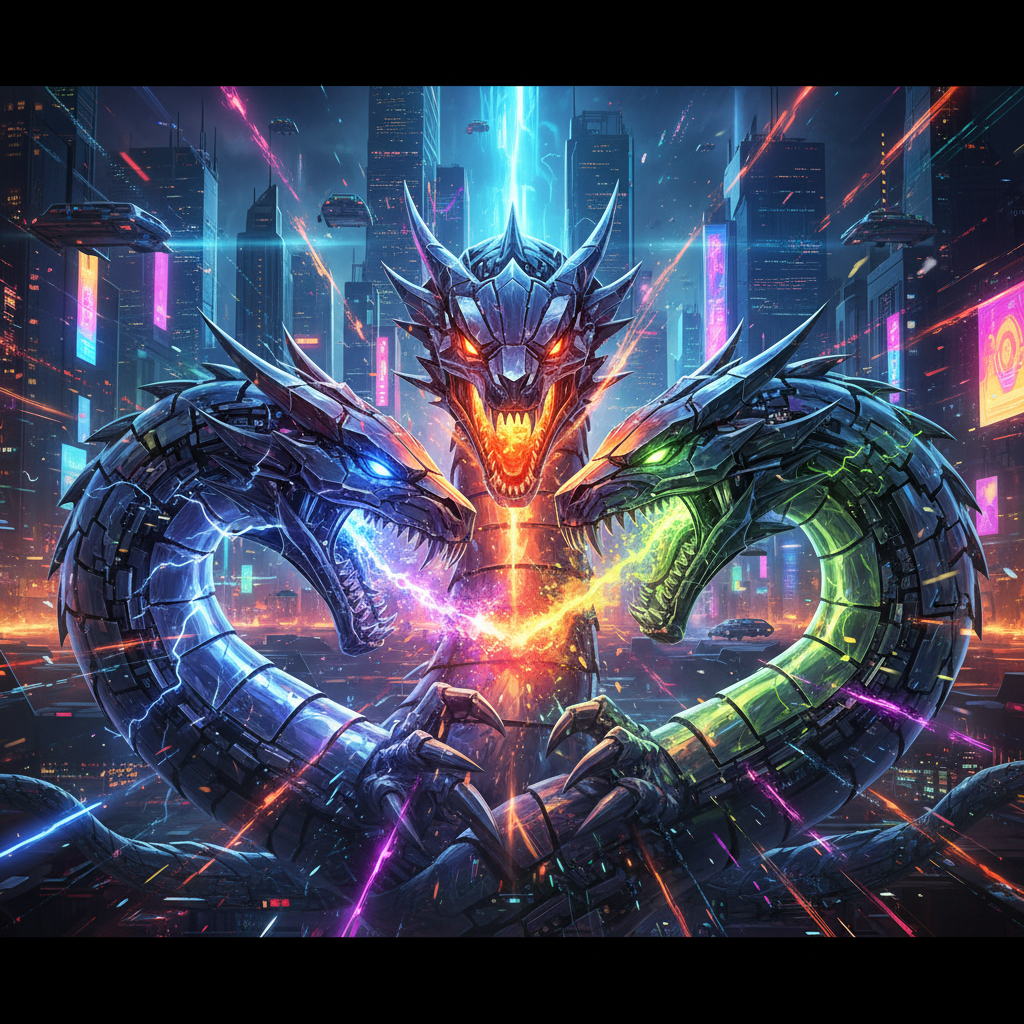
The New Old King, the Photorealist, and the Typographer
Let's be clear: Midjourney's era-defining run has set the gold standard for AI-powered artistry. Its v8 model is a testament to years of refinement, producing images with an aesthetic richness that is instantly recognizable. But 2026 is not 2024. The competitive landscape has fundamentally shifted. Two contenders, Flux 2 and Ideogram 3, have emerged from the noise, not as Midjourney clones, but as specialists carving out significant territory. Flux 2 is chasing the dragon of photorealism with terrifying accuracy, while Ideogram 3 has solved the AI typography problem so completely it feels like magic. This is no longer a one-horse race; it's a clash of titans with distinct philosophies.
We spent a month testing these three platforms head-to-head. The results are in, and the choice for marketers, designers, and artists is more complicated—and more exciting—than ever.
The Great 2026 Prompt-Off: A Four-Round Bout
We designed four distinct prompts to test the core competencies of each model: photorealism, complex scene composition, typography, and raw artistic creativity. The results speak for themselves.
Round 1: The Photorealistic Portrait
Prompt: "Photorealistic medium shot of a confident female startup CEO, 45 years old, in a brightly lit office, natural window light, subtle lens flare, shallow depth of field, wearing a dark blue blazer. 8K, hyper-detailed, Canon EOS R5."
- Midjourney v8: The result is beautiful, but not quite real. It's a "Midjourney person"—flawless skin, hyper-stylized lighting, and an ethereal quality that, while stunning, betrays its digital origins. The aesthetic is top-tier, but it feels more like a video game cinematic than a photograph.
- Flux 2: This is where Flux 2 shines. The output is almost indistinguishable from a real photograph. It captures the subtle imperfections—the slight asymmetry in the face, the texture of the blazer fabric, the way light realistically bounces off a pair of glasses she was given. It even nailed the specific bokeh effect of the requested lens. It’s unnervingly real.
- Ideogram 3: A very competent, but softer-focus image. It's more realistic than Midjourney but lacks the crisp, almost scientific precision of Flux 2. It’s a solid, usable corporate headshot, but it won’t fool a photographer.
Winner: Flux 2, by a country mile. For pure photorealism, it is the undisputed champion.
Round 2: The Complex Scene
Prompt: "Wide-angle shot of a bustling cyberpunk night market. A street food vendor is serving noodles to a cyborg customer. Neon signs in Japanese reflect in puddles on the ground. Two drones fly overhead."
- Midjourney v8: Unbeatable compositional harmony. Midjourney understands "vibe" better than any other AI. The scene is perfectly balanced, the color palette is electric and coherent, and every element feels like it belongs. The cyborg, the vendor, and the drones are all perfectly integrated. The details might not be perfect (a neon sign might have garbled text), but the overall image is a masterpiece of mood.
- Flux 2: Struggles with the artistic cohesion. It renders each element with incredible realism—the noodles look genuinely steamy, the metal on the cyborg is perfect—but the composition feels sterile, like a 3D render. The scene is technically accurate but lacks the soul and energy that Midjourney captures effortlessly.
- Ideogram 3: A good attempt, but it gets bogged down in the details. It tries to make the neon signs legible, but this distracts from the overall scene. The composition is a bit flatter, and it struggles to create a sense of depth compared to Midjourney.
Winner: Midjourney v8. When it comes to weaving complex elements into a cohesive, artistic whole, it remains the king.
Round 3: The Typographic Challenge
Prompt: "A clean, minimalist logo for a coffee brand called 'NEXUS BREW'. The text should be in a sleek, sans-serif font. The logo should feature a stylized coffee bean that forms the 'X' in NEXUS. White background."
- Midjourney v8: Failure. We get the classic "AI text" problem—garbled, nonsensical letters that vaguely resemble "NEXUS BREW." The coffee bean concept is either ignored or poorly executed. Midjourney still can't handle precise text.
- Flux 2: Better, but not perfect. It generates legible text, but the font control is weak, and the integration of the coffee bean into the letter 'X' is clumsy and often looks distorted. It’s usable as a rough concept but needs significant manual editing.
- Ideogram 3: Flawless victory. It not only renders "NEXUS BREW" in a perfect, clean sans-serif font, but it also understands the core creative instruction. It generates multiple options where the 'X' is cleverly and elegantly replaced by a stylized bean. This is Ideogram’s core strength, and it performs it with 10/10 reliability.
Winner: Ideogram 3. It’s not even a competition. For any image involving text, Ideogram is the only serious choice.
Round 4: The Abstract Concept
Prompt: "The concept of 'symbiosis' represented as an ethereal, glowing network of light connecting a bismuth crystal and a giant redwood tree. Abstract, painterly, vibrant colors."
- Midjourney v8: Pure art. It leans into the abstract nature of the prompt and delivers a jaw-dropping image that feels like a museum piece. The colors blend beautifully, the connection between the crystal and the tree is conceptual and emotional, and the entire image has a powerful, dreamlike quality.
- Flux 2: Too literal. It renders a perfect redwood tree and a perfect bismuth crystal, but the "glowing network of light" looks like simple light rays Photoshopped between them. It captures the objects, not the concept.
- Ideogram 3: A decent middle ground. The image is artistic and colorful, but it lacks the sheer "wow" factor of the Midjourney render. It’s a pretty picture, but it’s not capital-A Art.
Winner: Midjourney v8. For abstract and artistic interpretation, its heritage and training data shine through.
Feature & Usability Breakdown
Ease of Use & Interface
- Midjourney v8: Still heavily reliant on Discord, which remains a huge barrier to entry for many professionals. While the web interface has improved, the core workflow is clunky for a premium product in 2026.
- Flux 2: A clean, professional web-based UI. It feels like a mature SaaS product, with organized project folders, a clear history, and intuitive sliders for adjusting parameters. It is by far the most user-friendly.
- Ideogram 3: Simple and effective web UI, but perhaps too simple. It’s incredibly fast for generating text-based images, but lacks the advanced organizational tools of Flux.
Pricing & Value in 2026
- Midjourney v8: The premium option. The standard plan sits at around $40/month for a limited number of "fast" generations. It feels slightly overpriced given the competition.
- Flux 2: Aggressive pricing. Flux offers a $25/month plan with a generous number of credits, clearly aimed at capturing market share from Midjourney. Its focus on corporate and commercial use makes it a high-value proposition for businesses.
- Ideogram 3: Freemium model. A generous free tier for text-based generations, with a Pro plan at $15/month that unlocks higher resolutions and more concurrent jobs. It’s an easy impulse buy for anyone working with branding or social media.
The Verdict: Which AI Should You Use in 2026?
The answer depends entirely on your needs.
Choose Midjourney v8 if... you are an artist, a concept designer, or need to create images with a powerful, specific, and cohesive artistic style. If the "vibe" and mood of the image are more important than photorealism or text, Midjourney is still the master.
Choose Flux 2 if... your work demands realism. For product mockups, architectural visualization, stock photography replacement, and hyper-realistic portraits, Flux 2 is the new undisputed king. Its ease of use also makes it the best choice for corporate environments.
Choose Ideogram 3 if... your images involve any form of text. For logos, social media graphics, posters, and branding concepts, Ideogram 3 isn’t just an option; it’s the only tool that gets the job done reliably and creatively. It’s a specialist tool that is best-in-class at its specialty.
Key Takeaways
- Midjourney's strength is artistic cohesion and abstract interpretation, but it fails at text and true photorealism.
- Flux 2 is the new champion of photorealism, offering near-indistinguishable-from-reality outputs and a superior user interface for professional workflows.
- Ideogram 3 has solved AI typography. It is the go-to tool for any image that requires clean, controllable, and creative text.
- The market has matured from one dominant player to a set of powerful specialists. The best tool for the job is no longer a default choice.
Frequently Asked Questions
What is the easiest AI image generator to use for a beginner?
For absolute beginners in 2026, Flux 2 has the most intuitive, web-based interface. Its clean design and straightforward controls make it much easier to get started with than Midjourney's Discord-based system.
Can I use these tools for commercial projects?
Yes, all three platforms offer commercial licenses with their paid subscription plans. However, it's crucial to read the terms of service for each, as details around copyright and ownership of the generated images can vary.
Which tool is best for creating logos?
Ideogram 3 is hands-down the best tool for logo creation. Its ability to generate clean, accurate text and creatively integrate it with graphic elements is something Midjourney and Flux cannot currently compete with.
Is Midjourney still worth the price in 2026?
For artists and creatives who value its unique, hyper-stylized aesthetic and powerful compositional abilities, yes. For users who need photorealism or text, Flux 2 and Ideogram 3 offer better results at a more competitive price point.
'''Keep reading
Cursor vs Windsurf vs Claude Code vs Copilot: The 2026 AI Coding Showdown
Four AI coding tools. One month. Real production code. Here's which AI pair-programmer actually ships software in 2026 — and which one is quietly losing the race.
The AI Browser Wars: ChatGPT Atlas vs Perplexity Comet vs Dia (2026)
Chrome's 15-year reign is finally under threat. We spent two weeks living inside ChatGPT Atlas, Perplexity Comet, and Dia — here's the honest verdict on the AI browser wars of 2026.
AI Agents Are Eating SaaS: The 8 Best Autonomous AI Agents in 2026
Autonomous agents that browse, code, and close tickets on their own crossed the usability threshold this year. These are the 8 worth using right now.